RevWiser vs Confluence & Notion: Why Sales Teams Need More Than a Wiki

RevWiser vs Confluence & Notion: Why Sales Teams Need More Than a Wiki
Let's be upfront about something: Confluence and Notion are good products. They've genuinely transformed how teams document and share information. Millions of people use them productively every day.
So why do sales teams consistently struggle with them?
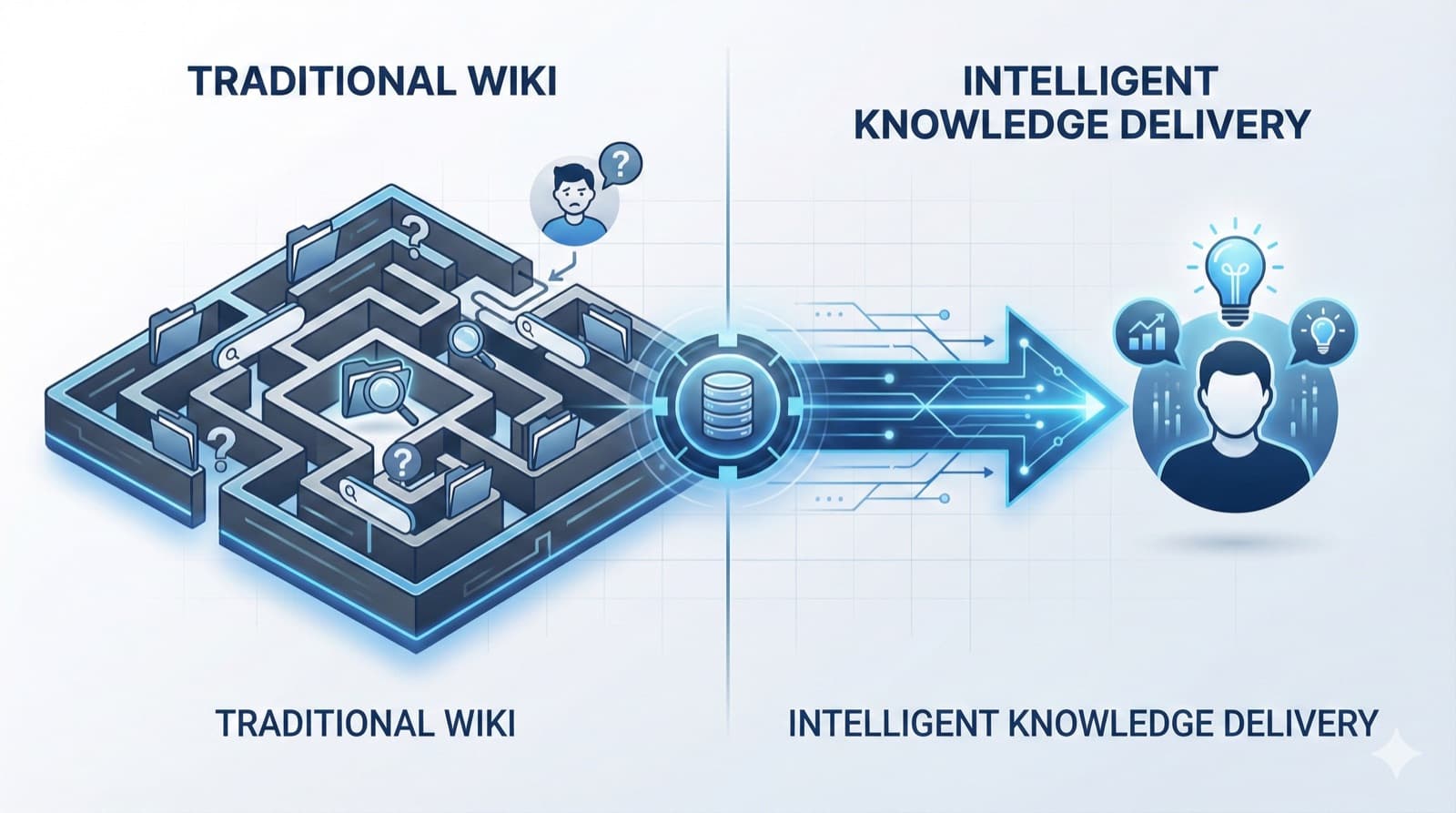
It's not that wikis are bad—it's that they solve a different problem. Wikis are designed for storing and organizing information. Sales requires getting the right information to the right person at the right moment, often during a live conversation. These are fundamentally different design goals.
This comparison isn't "wikis are terrible, buy RevWiser." It's an honest look at where wikis work, where they don't, and what the alternative looks like.
How Sales Teams Actually Use Wikis Today
Typical sales wiki structure:
Sales Resources/
├── Product/
│   ├── Feature Documentation
│   ├── Pricing
│   └── Roadmap
├── Sales Process/
│   ├── MEDDIC Overview
│   ├── Discovery Questions
│   └── Objection Handling
├── Marketing Content/
│   ├── Case Studies
│   ├── Battlecards
│   └── One-Pagers
└── Training/
    ├── Onboarding
    └── Product Updates
The promise: Everything in one place, searchable, collaborative.
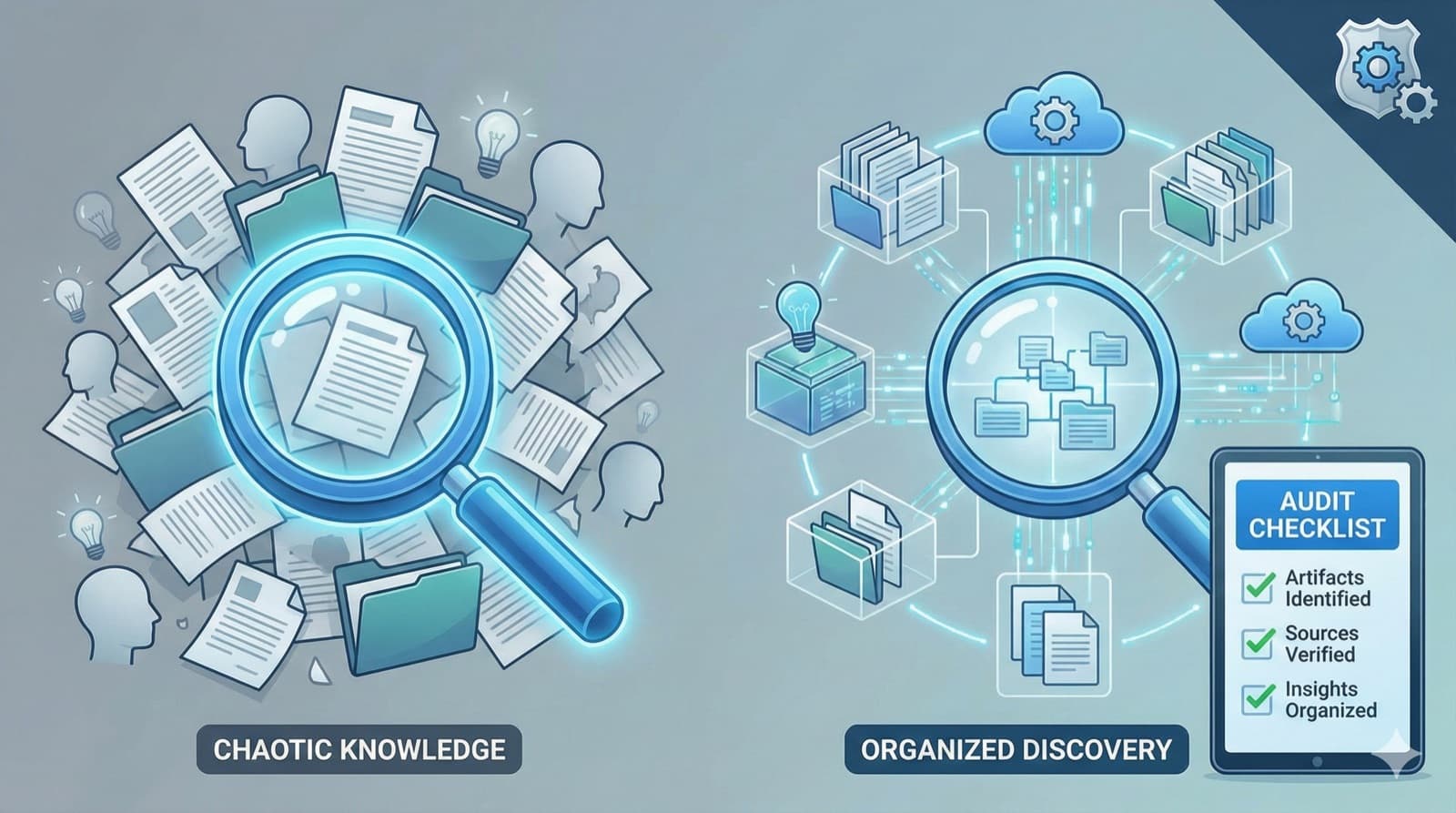
The reality: Content accumulates faster than it's maintained. Reps search, find multiple versions of the same thing, aren't sure which is current, and end up asking colleagues anyway. The wiki becomes a place where information goes to die, not a place where reps go to get answers.
Why This Model Fails Sales
| Wiki Assumption | Sales Reality |
|---|---|
| Users have time to search | Reps need answers in seconds, often mid-call |
| Users know what they're looking for | Reps need suggestions based on context |
| Content is inherently useful | Content must be applied to specific deals |
| Organization = accessibility | Folder structures don't match how reps think |
| Static content works | Sales situations are dynamic |
Head-to-Head Comparison
Core Purpose
| Aspect | Confluence/Notion | RevWiser |
|---|---|---|
| Design philosophy | Store and organize information | Deliver actionable guidance |
| Primary user | Anyone who reads/writes docs | Sales reps during selling |
| Success metric | Information is documented | Information drives deals |
Content Delivery
| Aspect | Confluence/Notion | RevWiser |
|---|---|---|
| How content surfaces | User searches or browses | System pushes based on context |
| When content appears | When user looks for it | Before/during/after meetings |
| Content relevance | Generic to topic | Tailored to specific deal |
| Live call support | None—can't search mid-call | Real-time Q&A during calls |
Content Management
| Aspect | Confluence/Notion | RevWiser |
|---|---|---|
| Volume | Unlimited—often thousands of pages | ~100 curated, maintained assets |
| Maintenance | Manual, often neglected | Owned, reviewed, kept current |
| Version control | Multiple versions coexist | Single source of truth |
| Currency indicator | "Last edited" date | Active freshness tracking |
Sales Methodology
| Aspect | Confluence/Notion | RevWiser |
|---|---|---|
| MEDDIC documentation | Wiki page explaining framework | Framework embedded in deals |
| Methodology execution | Hope reps remember training | Real-time prompts and scoring |
| Compliance tracking | Manual CRM field completion | Automatic capture and scoring |
| Gap identification | Manager review (delayed) | Real-time alerts |
Integration
| Aspect | Confluence/Notion | RevWiser |
|---|---|---|
| CRM integration | Links or embeds | Deep data integration |
| Calendar awareness | None | Meeting context drives content |
| Deal context | None | Understands opportunity details |
| Conversation intelligence | None | Integrates with call data |
The Search Problem
Why Wiki Search Fails Sales
Confluence and Notion have powerful search. So why do reps struggle?
Problem 1: The Query Gap
Reps don't always know what to search for. They know they need help, but not how to phrase it.
| What rep thinks | What they search | What they actually need |
|---|---|---|
| "I need something for this call" | "fintech case study" | ROI story for CFO in financial services |
| "How do I handle this objection?" | "pricing objection" | Specific response for "you're too expensive" in competitive deal |
| "What's our integration story?" | "integrations" | Technical details for Legacy System X with implementation timeline |
Problem 2: The Context Gap
Wiki search doesn't know:
- What deal you're working on
- What stage you're in
- Who you're meeting with
- What's already been discussed
- What competitors are involved
Problem 3: The Time Gap
Even when search works, it takes time:
- Navigate to wiki
- Formulate query
- Review results
- Open documents
- Find relevant section
- Extract what's needed
Average time: 8+ minutes
During a live call: Not possible
How RevWiser Solves Search
Instead of: Rep searches "fintech case study" RevWiser: "For your meeting with Acme Corp (fintech, CFO), here's the most relevant ROI case study. They saw 40% reduction in audit prep time."
The system:
- Knows the deal context
- Understands what content is relevant
- Surfaces it without searching
- Explains why it's relevant
The Currency Problem
How Wikis Go Stale
Day 1: Marketing creates battle card Day 30: Sales rep uses it, wins deal Day 90: Product releases update, battlecard now partially wrong Day 120: New rep uses outdated battlecard, loses deal Day 180: Someone notices, asks "who owns this?" Day 181: Original author left the company Day 365: Multiple versions exist, no one knows which is current
The result: Reps stop trusting wiki content. They ask colleagues instead.
The Currency Solution
RevWiser approach:
- Every content piece has an owner (named individual)
- Every piece has a review cadence
- System tracks freshness automatically
- Stale content flagged and hidden
- Currency visible to users
| Content Type | Review Cadence | Owner |
|---|---|---|
| Competitive battlecards | Monthly | Competitive Intel Lead |
| Pricing | Monthly | RevOps |
| Case studies | Quarterly | Marketing |
| Product features | Per release | Product Marketing |
The Live Call Gap
What Happens During Calls
Scenario: Customer asks about integration with their legacy CRM.
With Confluence/Notion:
- Rep can't search mid-call
- Says "let me get back to you on that"
- After call, searches wiki
- Finds maybe-current documentation
- Sends follow-up email
- Momentum lost. Competitor may answer first.
With RevWiser:
- Rep asks: "Integration story for Legacy CRM?"
- RevWiser responds: "Native connector, bidirectional sync, 2-3 week implementation. Here's the architecture diagram."
- Rep answers immediately
- Momentum maintained. Trust built.
The Real-Time Requirement
Sales conversations are unpredictable. Customers ask questions you didn't prepare for. Objections appear unexpectedly.
A tool that only helps before the call helps with maybe 20% of situations.
A tool that helps during the call—when stakes are highest—changes outcomes.
When Confluence/Notion Makes Sense
To be fair, traditional wikis are excellent for:
Internal documentation:
- Company policies
- HR information
- Process documentation
- Meeting notes
- Project management
Cross-functional collaboration:
- Product specs
- Marketing planning
- Engineering documentation
- Customer success playbooks
Long-form reference:
- Technical documentation
- Implementation guides
- Training curricula
The Hybrid Approach
Many organizations use both:
- Confluence/Notion: Company-wide knowledge management
- RevWiser: Sales-specific, action-oriented guidance
They solve different problems for different use cases.
The Migration Question
"We already have everything in Confluence..."
Common concern: "We've spent years building our wiki. Do we have to start over?"
Answer: No. RevWiser doesn't replace your wiki—it transforms how sales accesses content.
The integration approach:
- RevWiser connects to your existing content
- AI indexes and understands your materials
- Sales-specific content curated (the essential ~100 pieces)
- Content delivered contextually
- Wiki remains for reference; RevWiser for action
What changes:
- How reps access content (push vs. pull)
- When content surfaces (contextual vs. search)
- What content is maintained (curated vs. accumulated)
What stays:
- Your existing content investment
- Documentation for non-sales teams
- Long-form reference materials
Making the Decision
Choose Confluence/Notion if:
- Your primary need is company-wide documentation
- Sales is one of many teams using the system
- Budget is constrained
- Basic organization is sufficient
- Reps have time to search before calls
Choose RevWiser if:
- Sales productivity is a priority
- Reps waste significant time searching
- Methodology execution is inconsistent
- Content goes unused despite existing
- Real-time guidance would change outcomes
- Ramp time is too long
The ROI Question
| Metric | Wiki Only | With RevWiser |
|---|---|---|
| Time searching/week | 8+ hours | <2 hours |
| Content utilization | 20% | 80%+ |
| Meeting prep time | 45 min | 15 min |
| Ramp time | 6-9 months | 3-4 months |
| Methodology compliance | 40% | 85% |
Calculate your ROI:
- Hours saved × reps × hourly cost = Direct savings
- Faster ramp × hiring velocity = Earlier revenue
- Better execution × pipeline = Win rate improvement
The Fundamental Difference
Confluence and Notion answer: "Where can I find information?"
RevWiser answers: "What do I need to know right now to win this deal?"
One is a library. The other is a guide.
Both have value. But for sales teams who need to act—not just read—the approach matters as much as the content.
Our Honest Take
We built RevWiser because we experienced these wiki limitations ourselves. But we want to be honest about tradeoffs:
Wikis are cheaper. Confluence and Notion are inexpensive. Purpose-built GTM tools cost more. You need to believe the productivity gains justify the investment.
Wikis are more flexible. They're general-purpose tools that work across departments. If you want one system for everything, wikis win on breadth.
Migration has costs. You've already invested in your wiki. Content exists there. People know where things are. Switching has real transition costs.
That said, if your sales team is struggling with the patterns we've described—reps can't find content, don't trust what they find, ask colleagues instead of using the wiki—the wiki may never solve those problems. It's designed for storage, not delivery.
Where to Start
If you're unsure whether your wiki is working:
Quick test: Ask three reps how they prepare for important calls. If the wiki doesn't come up, that tells you something.
If wiki is working: Great. Keep using it. Add better ownership and review cycles to keep content current.
If wiki isn't working: The question is whether to fix it or replace it. Fixing usually means aggressive curation (50-100 core pages, everything else archived), clear ownership, and integrations that push content to reps. Replacing means purpose-built tools that change the fundamental model from search to delivery.
We obviously think the purpose-built approach is better for sales teams. But we'd rather you make the right decision for your situation than buy something that doesn't fit.
RevWiser delivers sales content in context—during meeting prep, in live calls, throughout deals—without requiring search. If your wiki isn't working for sales, see how we're different.
RevWiser Team
Content writer at RevWiser, focusing on go-to-market strategies and sales enablement.